
Massage therapy can be a wonderful way to relax, reduce tension and support your overall wellbeing. Two of the most popular options are Swedish massage and deep tissue massage.
Although both treatments use hands-on techniques to work with the muscles and soft tissues, they differ in pressure, purpose and overall experience. Understanding these differences can help you choose the treatment that best suits your needs.
What Is Swedish Massage?
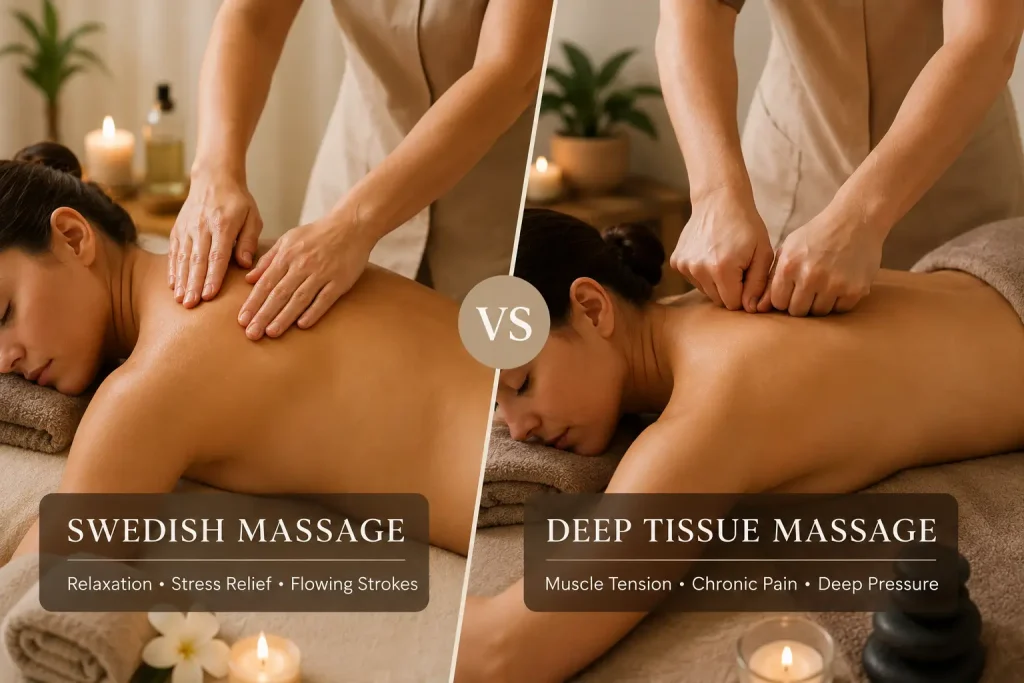
Swedish massage is generally a gentle to medium-pressure treatment designed to encourage relaxation and ease everyday muscle tension.
The therapist may use long, flowing strokes, kneading and circular movements to create a calm and soothing experience. Pressure can usually be adjusted according to your comfort level.
Swedish massage may be suitable for you if you:
- want to relax and switch off;
- feel stressed or mentally tired;
- experience mild muscle tension;
- are new to massage therapy;
- prefer gentle or moderate pressure;
- want a calming full-body treatment.
Many people choose Swedish massage as part of their regular self-care routine because it combines physical relaxation with a peaceful, restorative experience.
What Is Deep Tissue Massage?
Deep tissue massage uses slower movements and firmer pressure to work on deeper layers of muscle and connective tissue.
The therapist may focus on specific areas where you experience tightness, discomfort or restricted movement, such as the shoulders, neck, back or legs.
Deep tissue massage does not simply mean applying the strongest possible pressure. The treatment should always be controlled, professional and adjusted to suit your body and comfort level.
It may be suitable for you if you:
- experience persistent muscle tightness;
- have tension caused by physical work or exercise;
- prefer firmer pressure;
- want focused attention on specific areas;
- feel restricted or uncomfortable in certain muscles;
- are familiar with massage treatments.
The Main Differences
Pressure
Swedish massage usually uses light to medium pressure, although it can be adjusted.
Deep tissue massage generally uses firmer and more targeted pressure to work with deeper muscle layers.
Purpose
Swedish massage focuses mainly on relaxation, gentle tension relief and overall wellbeing.
Deep tissue massage is often chosen for more focused work on areas of tightness or muscular discomfort.
Technique
Swedish massage commonly includes smooth, flowing movements across larger areas of the body.
Deep tissue massage tends to use slower techniques with more concentrated pressure on specific muscles.
Overall Experience
Swedish massage is usually calming and deeply relaxing.
Deep tissue massage can feel more intense, particularly when the therapist works on a tight area. However, it should not feel unbearable or sharply painful.
Is Deep Tissue Massage Painful?
Deep tissue massage can create strong pressure and some areas may feel tender, especially where the muscles are very tight.
However, stronger pressure does not automatically create better results. You should always feel able to communicate with your therapist throughout the treatment.
Tell your therapist immediately if the pressure feels too intense, painful or uncomfortable. The treatment can then be adjusted to suit you.
You may experience temporary tenderness after a deep tissue massage, but severe or persistent pain is not normal and should not be ignored.
Which Massage Should You Choose?
Choose Swedish massage if your main goal is relaxation, stress relief and gentle support for everyday tension.
Choose deep tissue massage if you prefer firmer pressure and want the therapist to focus more closely on specific areas of muscular tightness.
You may also benefit from a personalised treatment combining elements of both techniques. For example, your therapist may use relaxing Swedish movements across most of the body and firmer techniques in areas that require additional attention.
What Happens During Your Consultation?
Before your massage, your therapist should ask about:
- areas of tension or discomfort;
- your preferred pressure;
- previous massage experiences;
- relevant injuries or health conditions;
- medications or recent procedures;
- your goals for the treatment.
This information allows the therapist to personalise the session and select appropriate techniques.
Always mention pregnancy, recent surgery, injuries, skin conditions or any medical concerns before your treatment. In some situations, medical approval may be required before receiving massage therapy.
Aftercare Following Your Massage
After your appointment:
- drink water as normal;
- allow yourself time to rest;
- avoid intense physical activity immediately afterwards;
- follow any personalised advice from your therapist;
- contact your therapist if you have concerns after the treatment.
How you feel afterwards will depend on the type of massage, pressure used and your individual body.
Book Your Massage at Aurora
At AURORA Beauty Studio & Academy, every massage is tailored to your individual needs, comfort and wellbeing.
Whether you are looking for a gentle Swedish massage, focused deep tissue treatment or a personalised combination of techniques, Shona will take time to understand what your body needs and create a calm, professional experience.
Contact us to choose the massage treatment that is right for you.